PBN maintenance is not a constant activity. Some tasks make sense at specific times of year. Others should be spread across the calendar to avoid operational bottlenecks. Strategic timing of maintenance activities improves efficiency while reducing the risk of overlooked tasks.
This guide presents a seasonal framework for PBN maintenance. We cover what to do and when to do it, from domain renewals to content refreshes to technical updates. Following this calendar prevents the maintenance debt that slowly destroys networks.
The goal is transforming reactive maintenance into planned operations. Scheduled work is cheaper, faster, and more thorough than emergency repairs.
Why Seasonal Planning Matters
Maintenance without structure becomes maintenance that does not happen. Tasks get delayed, forgotten, or done inconsistently. Seasonal planning converts vague intentions into concrete schedules.
Avoiding Maintenance Clusters
Without planning, maintenance tasks cluster around crisis points. All your domains expire the same month because you registered them together. All your content becomes outdated simultaneously because you built everything at once.
These clusters create operational nightmares. Renewing fifty domains in a single month strains budgets and attention. Updating content across an entire network in one push is exhausting and error-prone.
Seasonal planning distributes work across the year. Deliberate staggering prevents clusters from forming in the first place.
Aligning with Industry Rhythms
The SEO and hosting industries have natural rhythms. Algorithm updates tend to cluster around certain periods. Hosting promotions appear at predictable times. Domain auction activity varies seasonally.
Understanding these rhythms lets you plan maintenance around them. Do technical updates before anticipated algorithm updates. Acquire domains when auction competition is lower. Lock in hosting renewals during promotional periods.
Matching Business Cycles
Your own business cycles affect when maintenance makes sense. Agencies might be busier during client budget cycles. Affiliates might need networks performing optimally before peak shopping seasons.
Schedule intensive maintenance during slower periods. Ensure networks are stable and fully operational before your busy seasons begin.
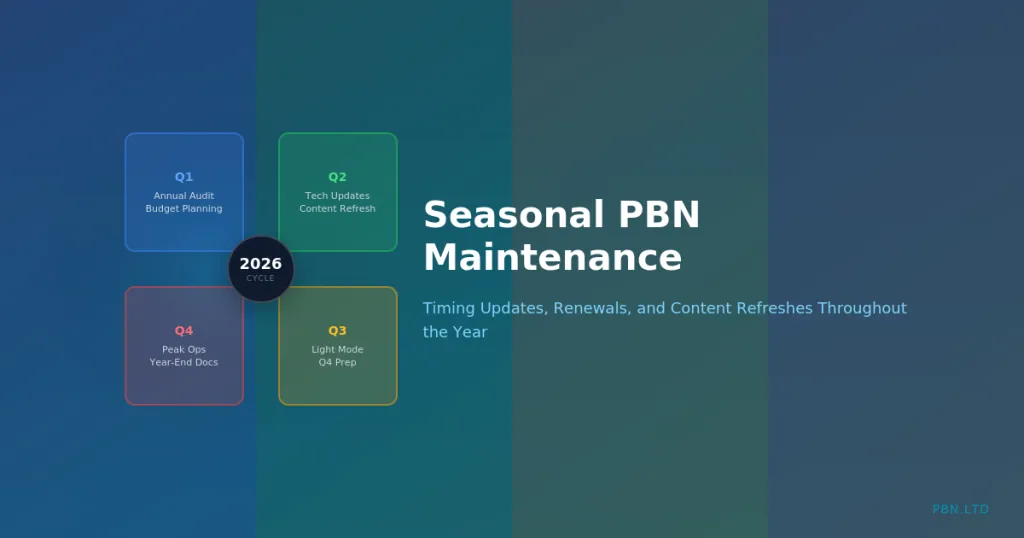
Q1: January Through March
The first quarter is ideal for comprehensive review and strategic planning. Holiday distractions have passed. The year ahead is visible.
Annual Network Audit
January is perfect for a comprehensive annual audit beyond your regular monthly checks. Review the entire network with fresh perspective.
Assess which sites performed well last year and which underperformed. Identify sites that should be retired and gaps that need new sites. Evaluate whether your network composition still matches your needs.
This annual review builds on your regular monthly audits but takes a longer strategic view. Monthly audits catch operational problems. Annual audits assess strategic direction.
Domain Portfolio Review
Review your entire domain portfolio. List all domains with their expiration dates, renewal costs, and current value to your network.
Identify domains not worth renewing. Some domains may have lost their value through deindexation, lost backlinks, or changed relevance. Letting low-value domains expire frees budget for better acquisitions.
Plan renewal timing for the year. If many domains expire in the same month, consider renewing some early to spread costs and attention across the calendar.
Budget Planning
Create or update your annual PBN budget. Include domain renewals, hosting costs, content creation, tools, and anticipated acquisitions.
Knowing your annual costs helps with business planning. It also reveals opportunities for cost reduction through bulk commitments or service consolidation.
Content Strategy Planning
Plan content needs for the year. How much new content will each site need? Which sites need content refreshes? What seasonal content should be prepared in advance?
Q1 is ideal for commissioning content that will be needed throughout the year. Writing content in batches is more efficient than constant small orders. Our guidance on PBN content creation can help with planning.
Q2: April Through June
The second quarter is excellent for technical maintenance and spring cleaning. Stable weather means fewer hosting disruptions. Attention is high before summer distractions.
Technical Infrastructure Review
Review your hosting infrastructure thoroughly. Is your current setup still optimal? Have better options emerged? Are you experiencing issues that warrant changes?
Evaluate whether your hosting provides adequate IP diversity and footprint protection. Network-level changes are disruptive, so thorough evaluation before making changes is essential.
If hosting migrations are needed, Q2 provides time to complete them before summer slowdowns and well before year-end busy periods.
WordPress and Plugin Updates
Conduct comprehensive software updates across your network. WordPress core, themes, and plugins all accumulate updates throughout the year.
Test updates on a few sites first before rolling out network-wide. Some updates cause compatibility issues. Better to discover this on a handful of sites than across your entire network simultaneously.
Review whether your current plugins are still the best choices. Plugin recommendations evolve. See our current recommended WordPress plugins for updated guidance.
Security Audit
Conduct deep security audits across your network. Beyond regular malware scans, review access controls, update passwords, and verify security configurations.
Check for any compromised sites that slipped through regular monitoring. Review login logs for suspicious access patterns. Ensure backup systems function correctly.
Spring security audits catch issues before summer, when reduced attention might allow compromises to go unnoticed longer.
Content Refresh Wave
Update outdated content across your network. Content from previous years may contain outdated statistics, defunct links, or obsolete information.
Focus on high-value pages first. Posts containing important money site links deserve priority. Supporting content can be updated more gradually.
Fresh content signals active maintenance. Sites where even old posts get periodic updates appear more legitimate than sites with obviously stale content.
Q3: July Through September
Summer months often mean reduced attention and potential vacation disruptions. Plan accordingly.
Automation Verification
Before summer distractions hit, verify all automated systems function correctly. Monitoring alerts should reach you. Automatic renewals should be configured. Scheduled content should deploy properly.
Check that indexation monitoring is active and alerts are configured. Automated monitoring is most valuable when manual attention is limited.
If you plan vacation time, ensure someone can respond to critical alerts or that automated systems can handle foreseeable issues.
Light Maintenance Mode
Accept that summer may mean reduced maintenance intensity. Focus on critical items: domain renewals, security alerts, major technical issues. Let non-urgent improvements wait.
This is not neglect but realistic planning. Attempting intensive projects during periods of reduced availability creates stress and increases error rates. Schedule major work for other quarters.
Domain Acquisition Opportunities
Summer can offer domain acquisition opportunities. Competition at auctions may decrease as others take vacation. Expired domain inventory continues flowing even when buyer attention wanes.
If you have budget allocated for domain acquisition, summer monitoring can yield good deals. Use our domain evaluation framework to assess opportunities quickly.
Q4 Preparation
Late Q3 is the time to prepare for year-end demands. If your business sees Q4 peaks, networks should be optimised before that period begins.
Review network capacity. Will you need additional sites for Q4 campaigns? New sites need time to develop before they become useful. Starting in September allows adequate preparation time.
Ensure content queues are stocked. You do not want to commission content under deadline pressure during your busiest period.
Q4: October Through December
The fourth quarter often brings peak demand alongside holiday distractions. Balance operational needs with realistic capacity.
Peak Season Operations
If Q4 is your busy season, focus on operational execution rather than maintenance projects. Networks should already be optimised from earlier preparation.
Deploy planned links. Execute client campaigns. Use your network to support business objectives. Major maintenance can wait until January.
Maintain monitoring but do not start disruptive projects. A hosting migration in November invites disaster during peak season.
Year-End Documentation
Document network status before year end. Record current site count, key metrics, issues encountered, and changes made throughout the year.
This documentation supports your Q1 annual audit. Having records from year end makes January review much more efficient.
Our link tracking system maintains records automatically, but supplementary documentation of strategic decisions and observations adds valuable context.
Holiday Period Planning
Plan for reduced capacity during late December holidays. Critical systems should require minimal attention. Non-urgent issues should wait until January.
Schedule any domains expiring in late December for early renewal. A domain expiration during holidays when you cannot respond quickly is a preventable disaster.
Verify monitoring systems will alert you to genuine emergencies while filtering routine notifications that can wait.
Next Year Planning
Late December is ideal for preliminary next-year planning. Outline major projects, anticipated needs, and strategic priorities.
This preliminary planning feeds into the detailed Q1 review. Arriving in January with initial thoughts already developed makes annual planning more productive.
Ongoing Monthly Tasks
Some maintenance happens regardless of season. These monthly tasks provide continuous network health monitoring.
Indexation Monitoring
Check indexation status monthly for all sites. Automated monitoring helps but periodic manual verification catches issues automation might miss.
Record indexation data over time. Trends reveal problems before they become critical. A site slowly losing indexed pages needs attention before it drops entirely.
Domain Expiration Review
Monthly domain expiration checks prevent surprises. Identify any domains expiring within 90 days and ensure renewal is scheduled.
Our domain management tools provide expiration tracking and renewal reminders. Use these tools consistently rather than relying on memory.
Link Verification
Verify money site links remain in place monthly. Links can disappear through site hacks, accidental edits, or technical issues.
Automated link tracking simplifies this process. Manual spot-checks provide additional confidence that automated systems function correctly.
Content Publishing
Maintain content publishing schedules across your network. Sites need periodic new content to appear active. Our guidance on content scheduling covers optimal publishing patterns.
Monthly content deployment keeps sites fresh without requiring constant attention. Batching content creation and scheduling deployment spreads the work efficiently.
Staggering Renewals and Registrations
New network builders often register all domains at once, creating future renewal clusters. Deliberate staggering prevents this problem.
Initial Registration Strategy
When building a new network, stagger domain registrations across multiple months. Rather than registering fifty domains in January, register ten each month from January through May.
This creates naturally staggered renewal dates. Future renewals distribute across the year rather than clustering in one month.
Multi-Year Registration Options
Consider multi-year registrations for valuable domains. A three-year registration means renewal attention only every third year. This reduces ongoing maintenance burden.
Multi-year registration also demonstrates commitment. Some argue that longer registration periods signal legitimacy, though the SEO impact is debated.
Use multi-year registration selectively. High-value domains that will definitely remain in your network benefit most. New domains whose value is unproven might not warrant multi-year commitment.
Deliberate Expiration Spreading
For existing networks with clustered expirations, deliberately spread future renewals. When renewing domains, extend some by two years instead of one to push their next renewal further out.
Over time, this converts a cluster into a distribution. The goal is roughly even renewal volume each month rather than annual spikes.
Timing Around Algorithm Updates
Google releases major algorithm updates multiple times per year. While exact dates are unpredictable, patterns exist.
Update Timing Patterns
Core updates typically occur every few months. March and late year updates have been common. Spam-focused updates often accompany core updates.
Tracking historical update patterns helps anticipate timing. Our algorithm update history provides context for understanding update cycles.
Pre-Update Preparation
Before anticipated update periods, ensure your network is in optimal condition. Fix any known issues. Complete pending maintenance. Resolve quality concerns.
Avoid making major changes immediately before expected updates. If an update affects your sites, determining whether the update or your changes caused the impact becomes impossible.
Post-Update Assessment
After major updates, assess impact across your network. Did any sites lose indexation? Did rankings change for sites receiving your links? Did any patterns emerge?
Give updates time to settle before drawing conclusions. Initial volatility often stabilises. Wait two to three weeks before making major strategic changes based on update impact.
Conclusion
Seasonal maintenance planning transforms chaotic reactive operations into predictable scheduled work. Each quarter has natural focus areas that match available attention and industry rhythms.
Q1 brings strategic review and annual planning. Q2 enables intensive technical maintenance. Q3 accommodates reduced summer capacity while preparing for year end. Q4 focuses on execution during peak periods.
Overlay monthly ongoing tasks across this seasonal framework. The combination ensures comprehensive coverage without overwhelming any single period.
Networks maintained on seasonal schedules last longer, perform better, and require less emergency intervention. The planning investment pays continuous operational dividends.
For PBN hosting that supports these operational requirements with built-in monitoring, management tools, and seasonal maintenance features, our platform is designed for serious network operators who plan ahead.